
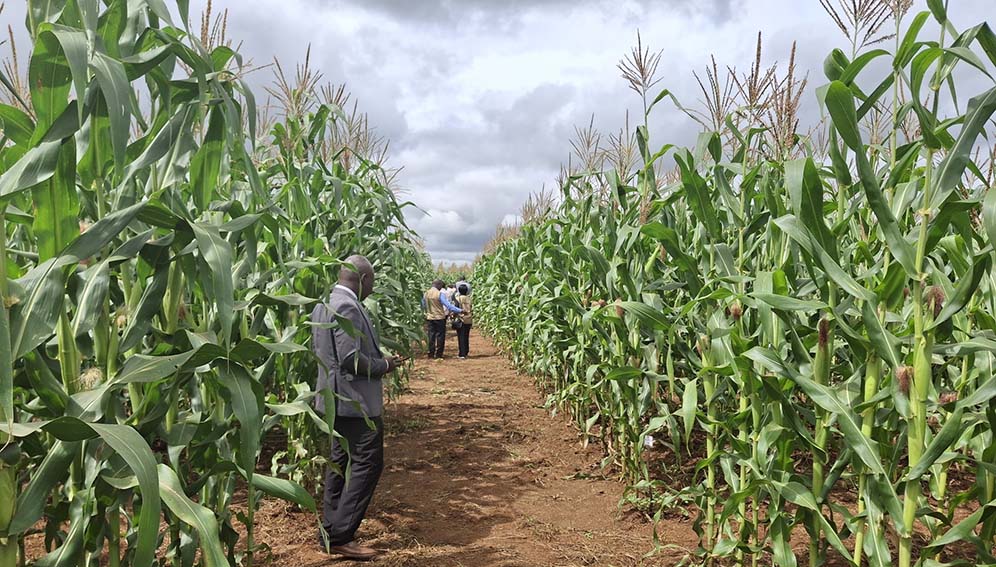
Field trials for a locally developed organo-mineral fertiliser are progressing across Malawi as the country seeks affordable alternatives to imported inputs, according to SGCI Africa. Members of the National Commission for Science and Technology recently visited testing sites at the Lilongwe University of Agriculture and Natural Resources (LUANAR) and the Bvumbwe Research Station, where the formulation is being evaluated on maize crops. The fertiliser, created by LUANAR scientists using domestic organic and mineral waste, previously achieved preliminary yields of eight tonnes per hectare and is currently being tested at five research stations nationwide.
Update: The Centre for Democracy and Economic Development Initiatives (CDEDI) has demanded that the Treasury immediately release maize procurement funds to the Agricultural Development and Marketing Corporation (ADMARC). Speaking at a press briefing in Blantyre, CDEDI Executive Director Sylvester Namiwa warned that ongoing delays leave local farmers vulnerable to price exploitation by private traders during the peak harvest season, according to Malawi24. Namiwa stated that failing to fund the state grain trader could cause a repeat of last year's food security crisis and force the country to rely on costly maize imports.
Update: A new joint study by LUANAR and the Farmers Union of Malawi has outlined structural problems in the nation's tobacco sector, Nation Online reports. The research explains how a 27 million kilogram crop oversupply has weakened farmer bargaining power and depressed market prices. The study notes that the number of active tobacco-buying companies in Malawi has dropped from eleven to eight, reducing market competition as farmers face high production costs.
Update: Concerns over global shipping disruptions are growing ahead of the planting season, with humanitarian groups and industry leaders warning of impacts on Malawi's food security. According to the Fertiliser Association of Malawi, as reported by Nation Online, shipping restrictions in the Strait of Hormuz directly threaten 35 percent of Malawi's urea imports and 23 percent of its phosphate fertiliser supply. Humanitarian groups like CARE have also issued warnings regarding the crisis. Yashodhan Gharat, Malawi country director for the One Acre Fund, told gCaptain that he doubts smaller markets like Malawi will be able to secure adequate nutrients as global producers reallocate their limited supplies to wealthier buyers.