
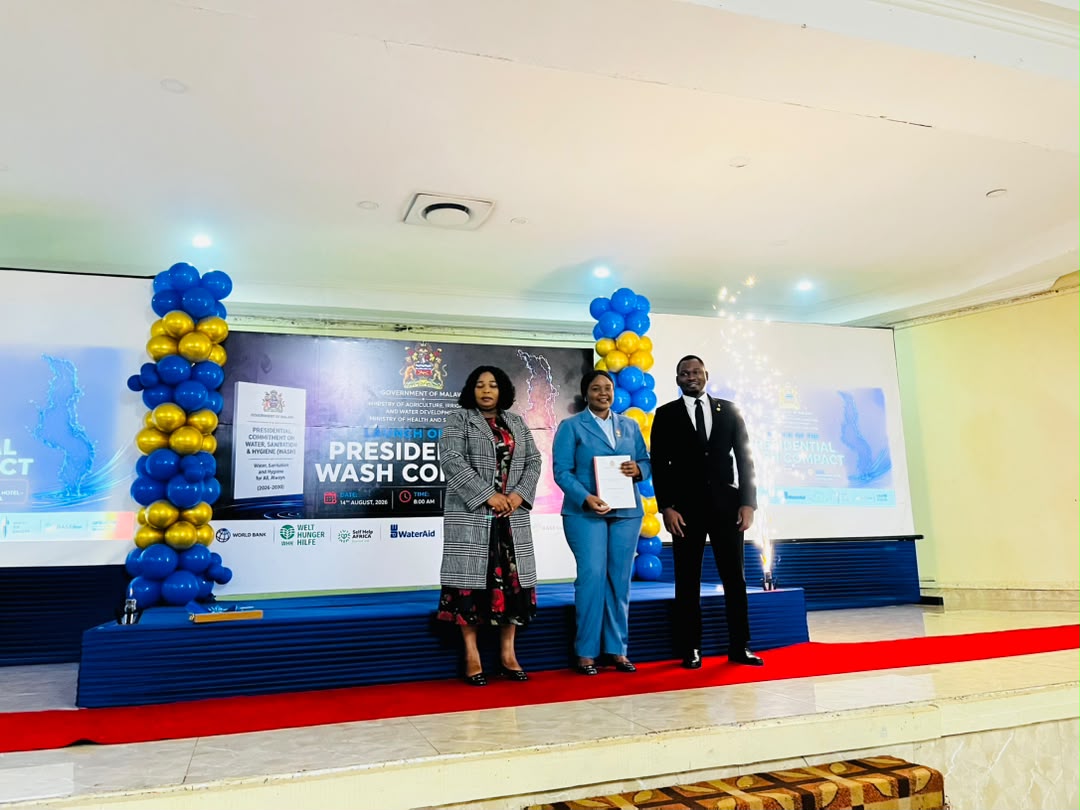
According to Nyasa Times and MANA News, the Malawian government has launched the Presidential Water, Sanitation and Hygiene (WASH) Compact to expand basic sanitation access from 40 percent to 65 percent by 2030. Unveiled in Lilongwe, the initiative is backed by Executive Order Number 2 of 2026, which mandates the maintenance of sanitation and waste disposal facilities in schools, workplaces, and public areas. Officials estimate the country will require K555 billion annually to meet these targets and adequately address the ongoing water crisis.
In a concurrent public health effort, MANA News reports that the government has rolled out a national assessment to determine the prevalence of anaemia and malaria among children and adolescents. Conducted by the Ministry of Health and Sanitation alongside the National Statistical Office, the exercise is taking place across eight districts until August 31. The data will guide future health interventions, as current records indicate that anaemia affects 56 percent of children under five and 41 percent of pregnant women in the country.
On the technology front, Nation Online reports that students at the Malawi University of Science and Technology (MUST) are developing new tools to digitise the country's public health records. During an innovation challenge held on August 13 in Blantyre, a student team named MEDTech Innovators won K3 million for prototyping a scalable Electronic Medical Record System. The Ministry of Health praised the initiative, noting that replacing paper-based health passports will prevent the loss of critical patient histories and streamline healthcare delivery.